
Greetings, Alchemists!
Today we will explore every detail of a mechanic we interact with from the very first turn of each game to the last. In this FAQ, we will break down how merchants work in Master Of Cladia.
Contents
1. Regular Merchant
Each turn, the regular merchant offers a varied selection of ingredients, but never all of them.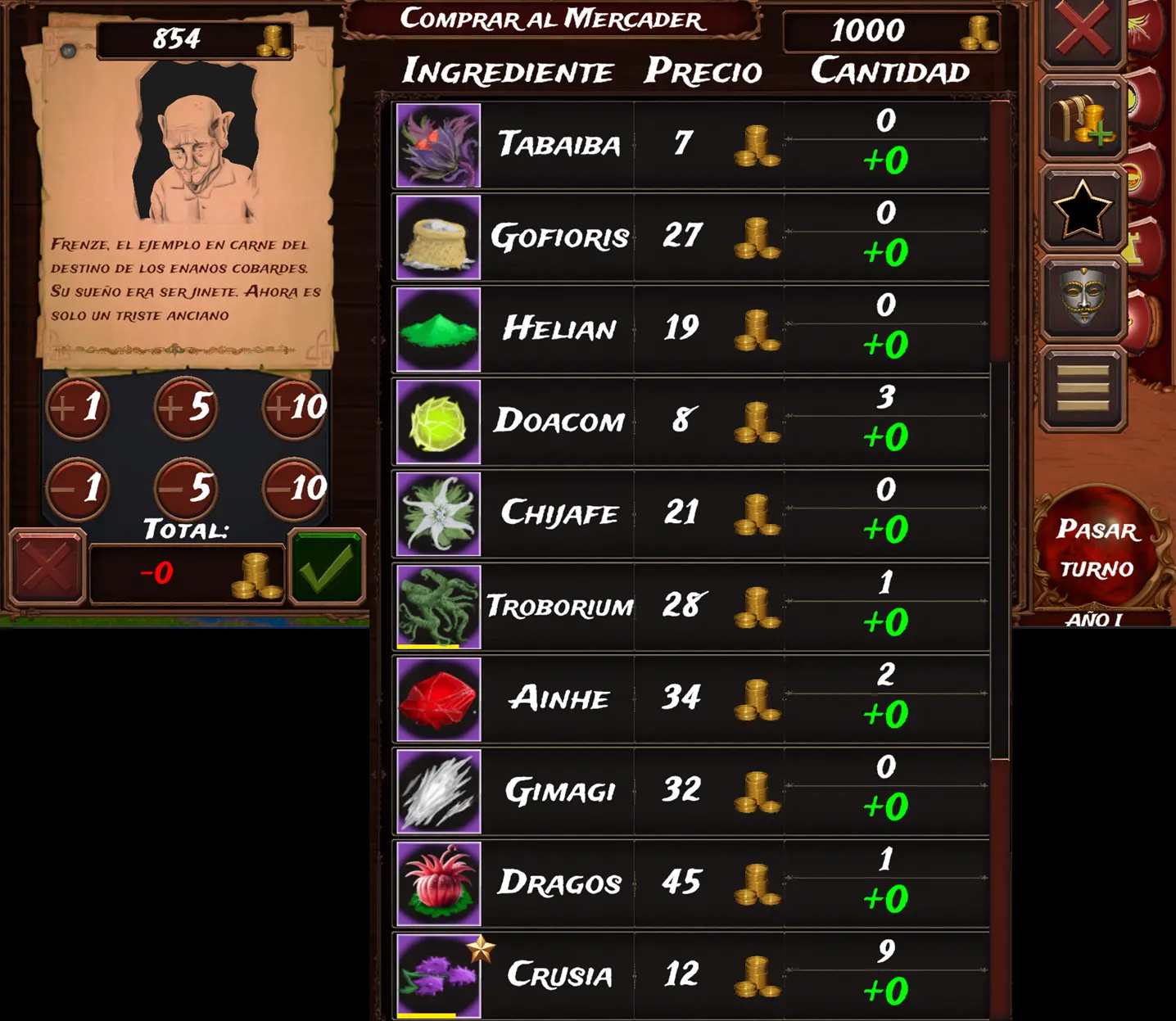
* Note: I had to edit the image so that all the ingredients this merchant brings could be seen at once.
The quantity of each ingredient available for purchase is UNLIMITED. We can buy any amount of "Tabaiba" as long as we have enough money to pay for it. Ingredients we purchase are also available immediately for experiments or for casting spells we already know.
For each ingredient, we can also see how much we know about it through the knowledge bar at the bottom, whether it belongs to a favorite spell through the small star at the top right, its price, how much we own, and how much we have in the cart.
It is also worth pointing out that the gold on the right is the gold we have available to buy ingredients, while the gold on the left is the merchant's available gold for buying ingredients from us. Naturally, that amount increases when we buy ingredients from the merchant.

As mentioned earlier, we can also SELL ingredients to this merchant and receive the money immediately.
To switch to selling mode, simply tap this button:
After pressing it, we can see that the ingredient list and prices change.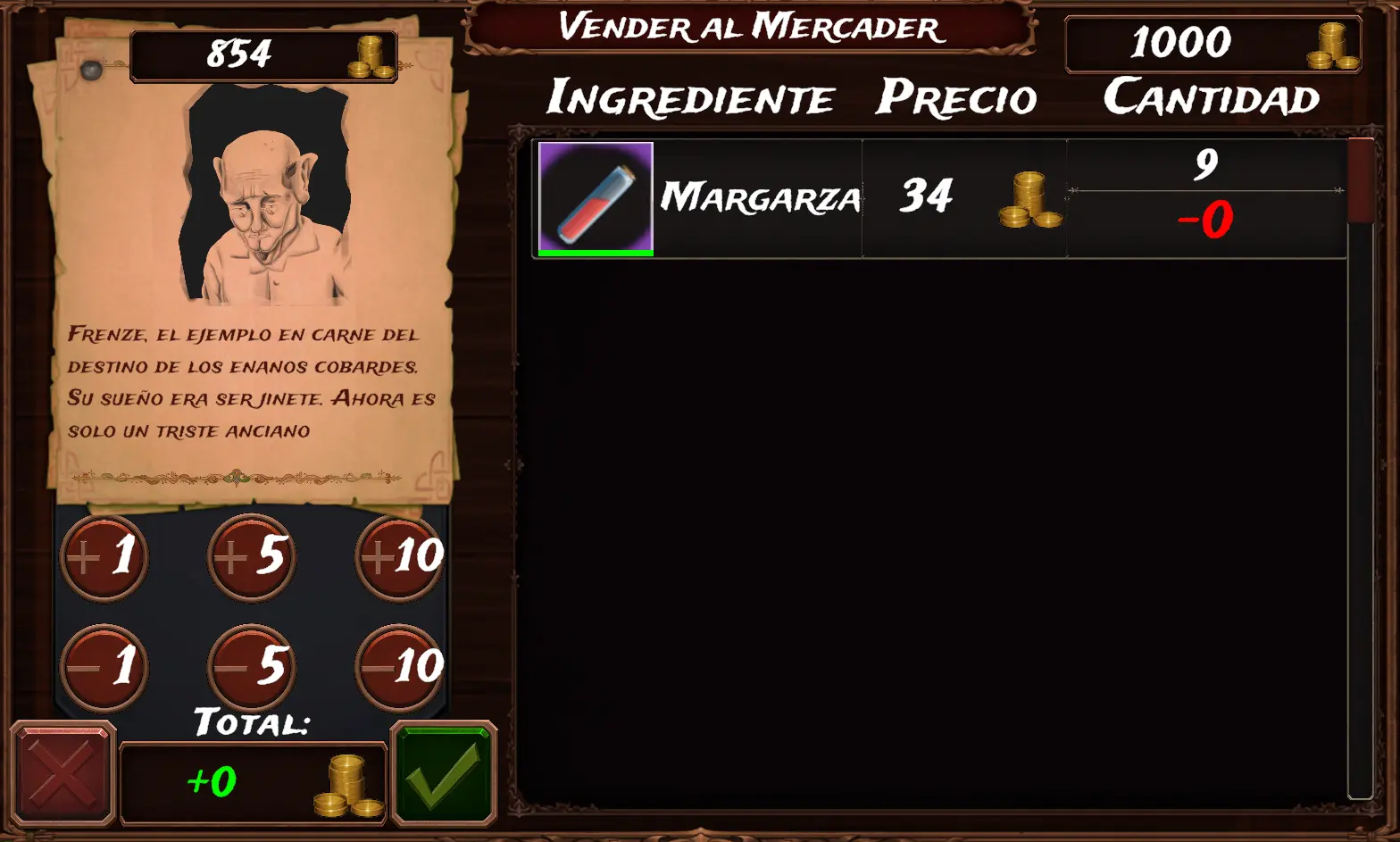
The merchant always buys ingredients from us at a HIGHER price than the price at which they normally sell them. Naturally, they always buy ingredients they do not sell. They will buy any quantity, as long as we have those ingredients and the merchant has enough gold to keep trading.
When we sell ingredients, we lose them immediately, but we also receive the gold immediately.
2. Black Market
The Black Market is like the regular market, but it always has ALL ingredients available. However, its prices are much higher than the regular merchant's, and ingredients arrive with a delay of 1 turn. We pay more and cannot use them immediately: we receive them on the next turn instead.
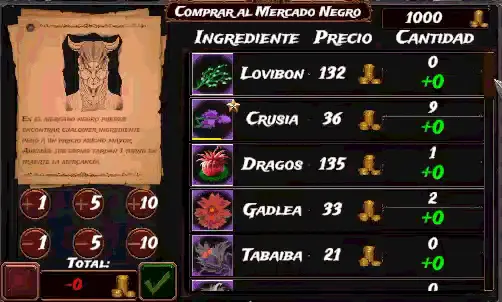
We can also sell on the Black Market. It buys every ingredient too, but removes the ingredients immediately and pays us on the next turn. Its buying prices are also extremely low compared with the regular merchant's.
To switch to the Black Market, press this button. 
3. Merchant Rotation
There is a secret that only the best alchemists know... a secret that lets us make money by buying and selling ingredients and optimize our Black Market purchases. There are actually only 11 merchants. Yes, you heard that right: every 11 turns, the merchants cycle back to the first one you saw, following exactly the same order for every player. Each player starts with a different merchant, though. For example, one may start with 1, another with 5, and another with 11. On the next turn, the first would have 2, the second 6, and the last 1.
For example: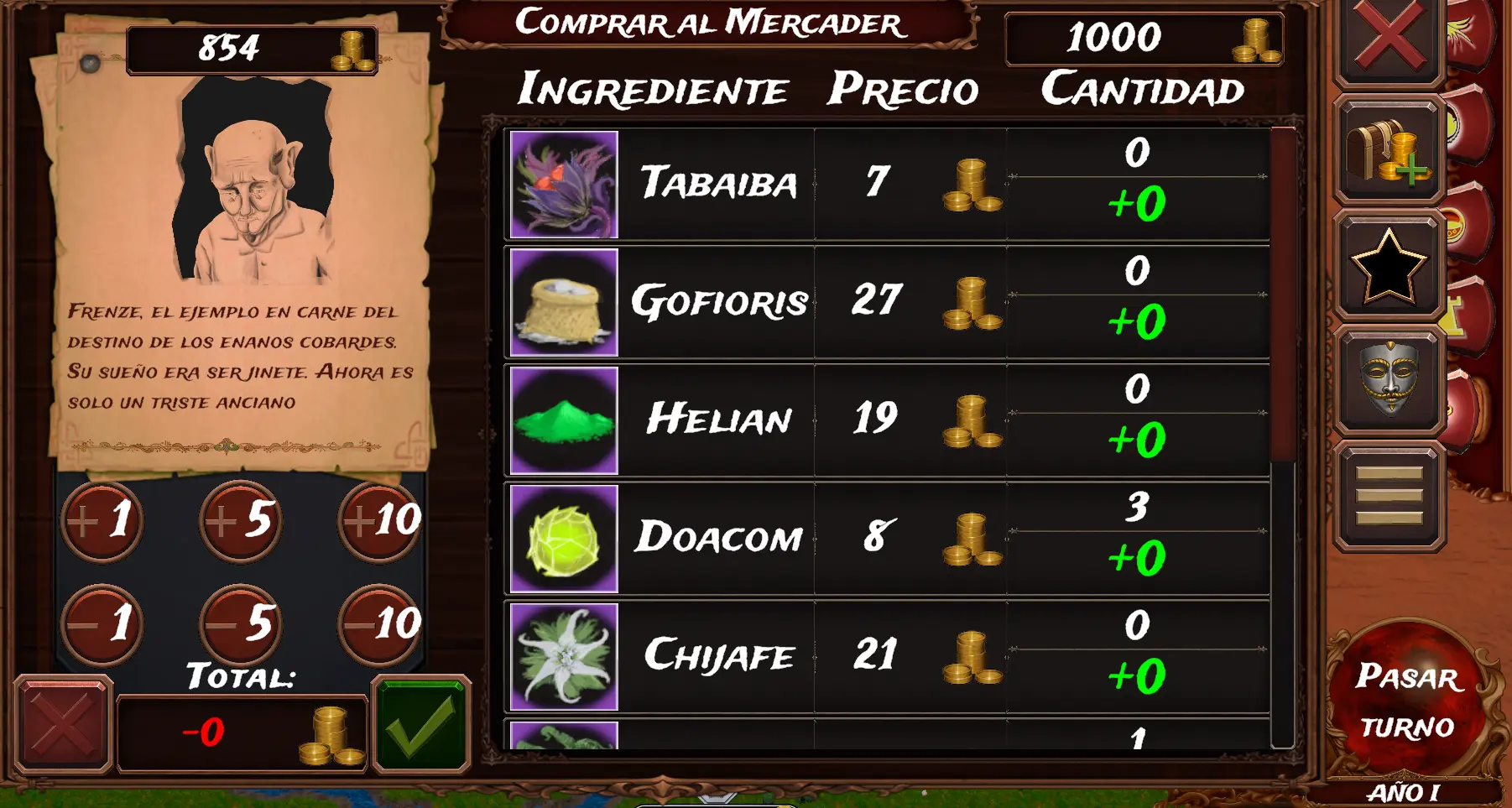
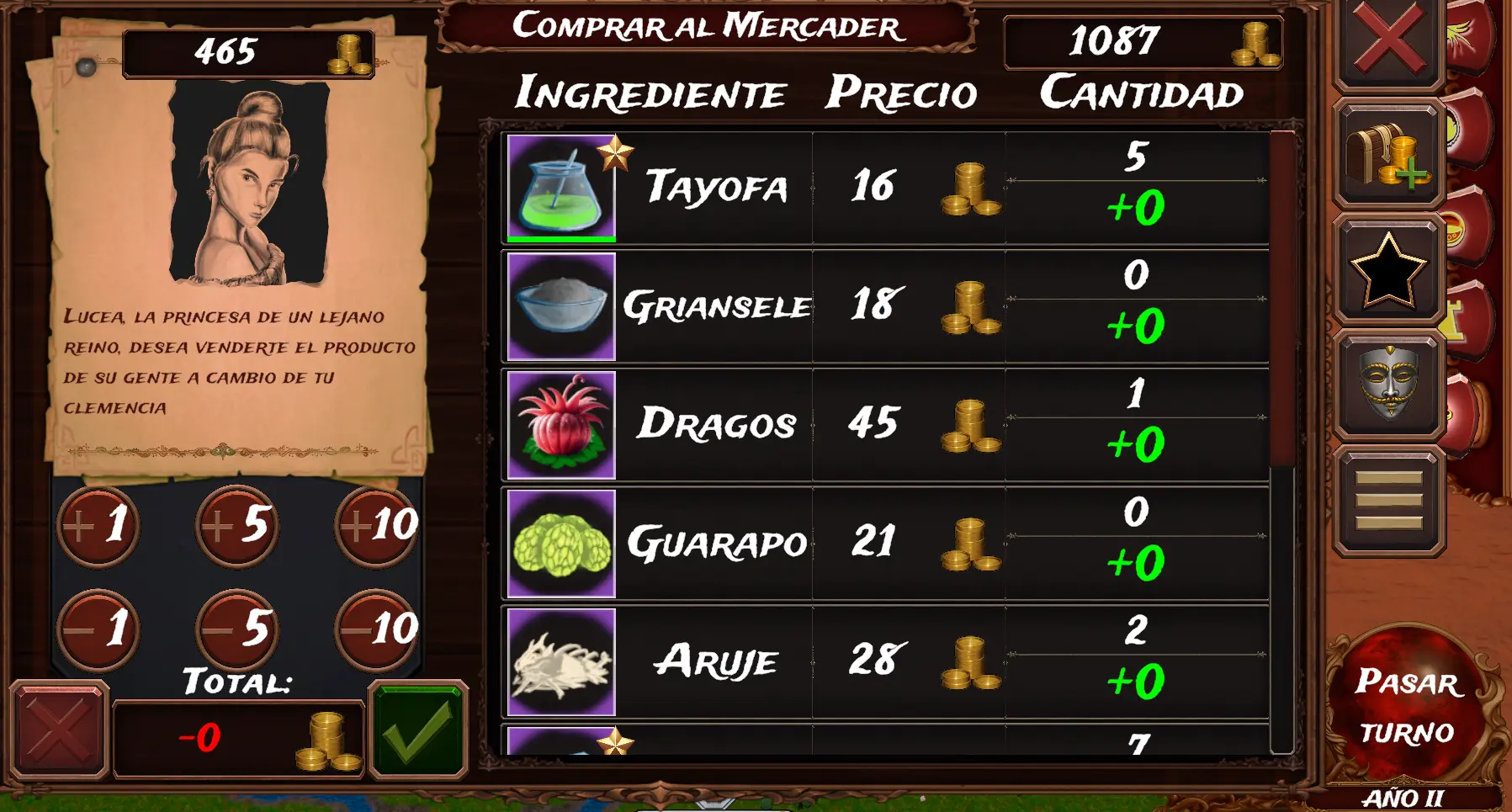
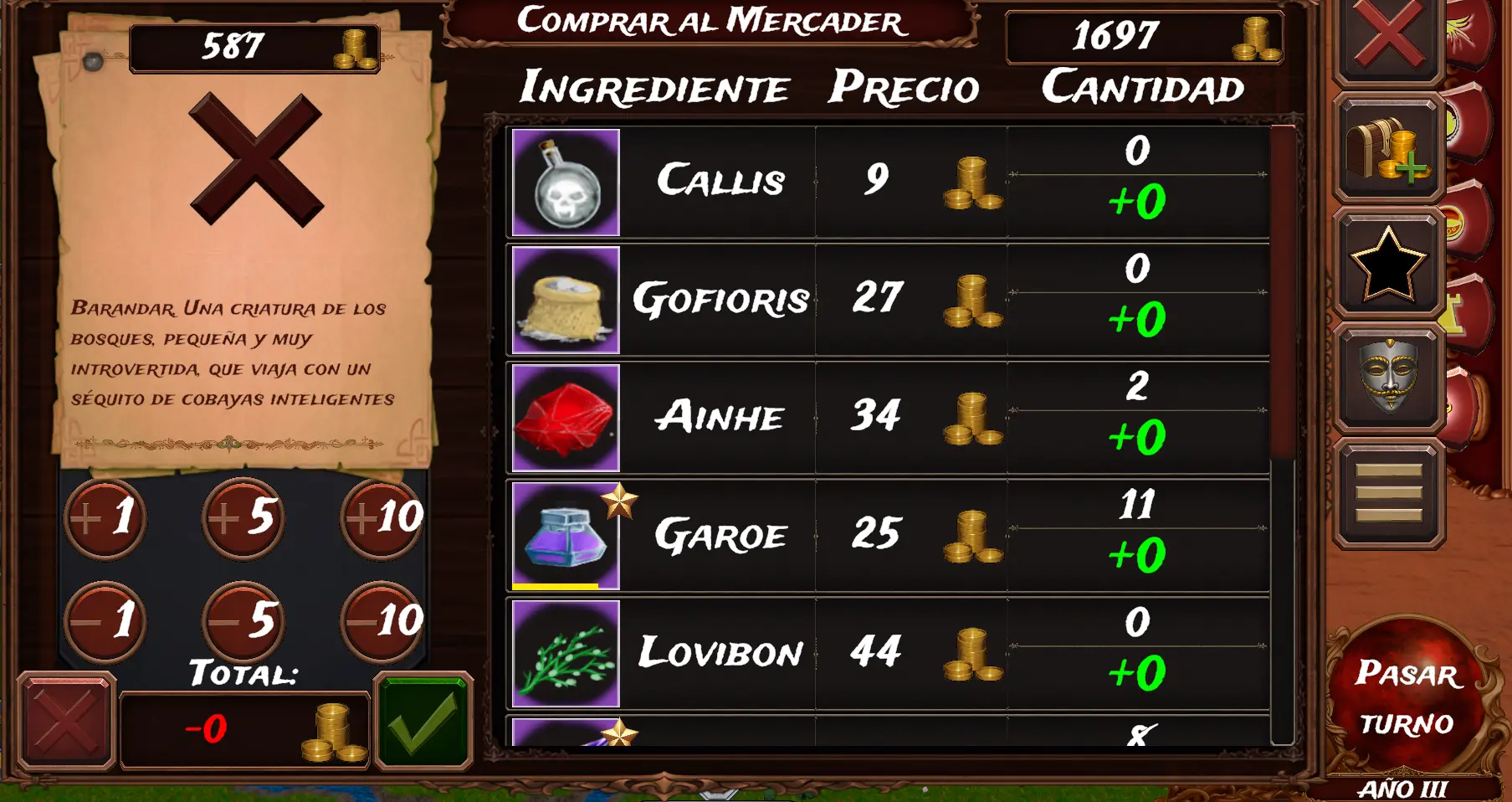
...
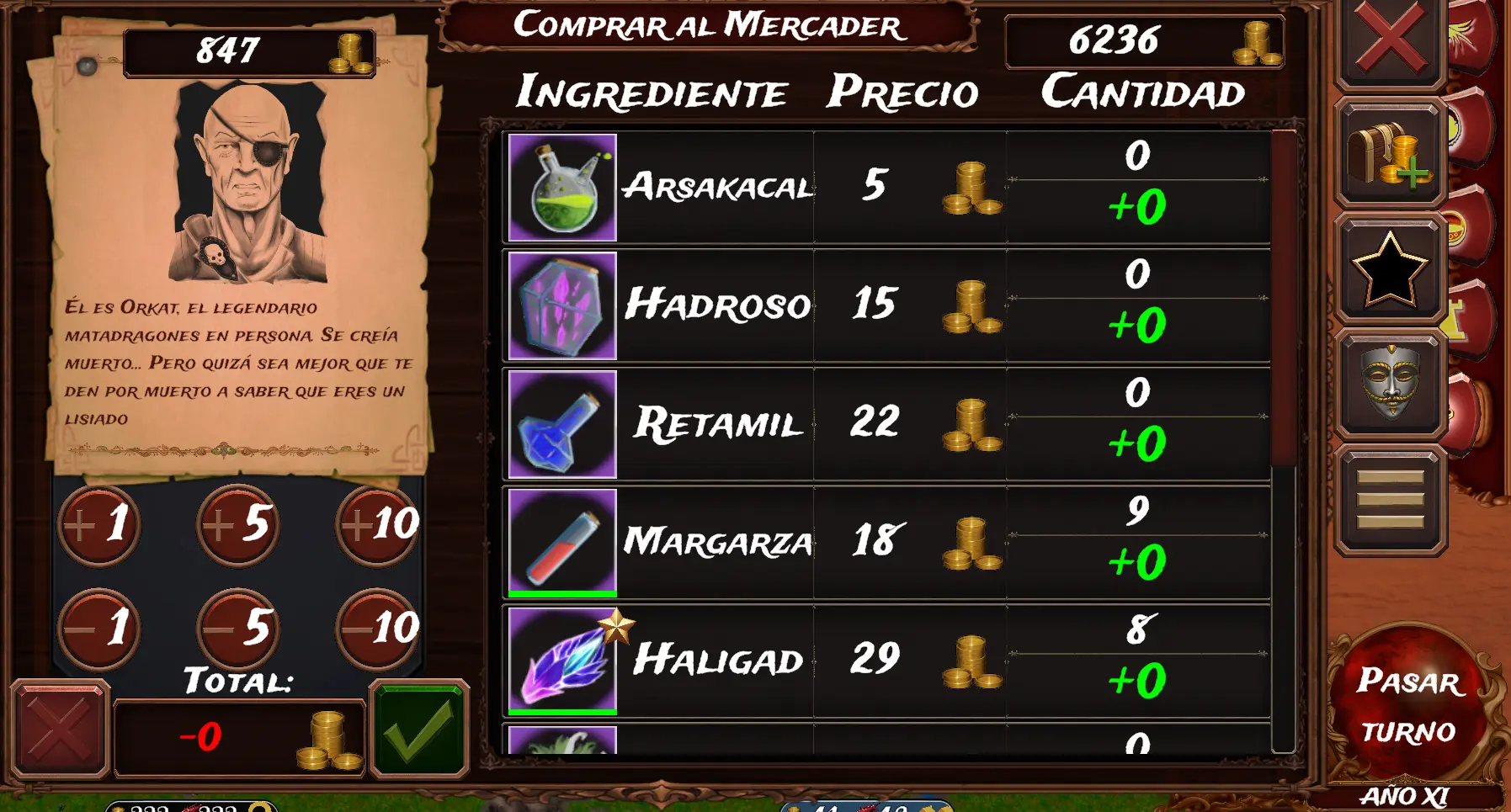
And on turn 12, the first one appears again.
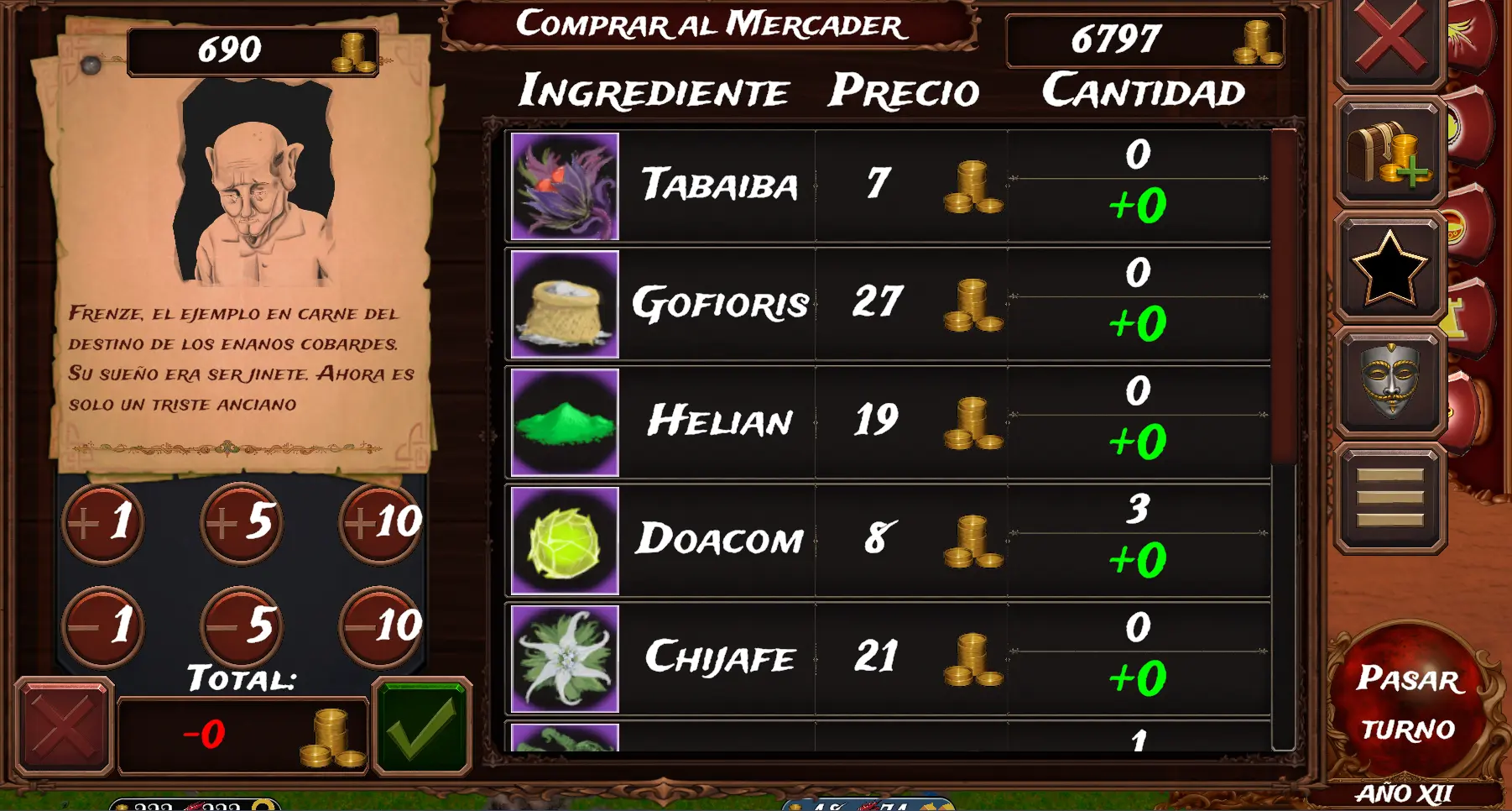
Some of you have surely worked it out already... If I record which merchant arrives each turn and all the ingredients they bring, from turn 11 onward I can know which ingredients will arrive next turn. This lets you buy on the Black Market, which is much more expensive than the regular market, only when you really need to. There is no point in buying something at a higher Black Market price if you will not receive it until next turn anyway, when waiting and buying it from the regular merchant would get it to you on that same next turn for much less.
We can also sell the current merchant all the ingredients that the next merchant will bring. In the earlier selling example, the merchant buys Margarza from us at 34 coins each, but next turn the next merchant sells it for 18 coins. We earn 16 gold coins for each Margarza sold and bought back next turn. It is not infinite money, because the merchant has limited gold to buy ingredients from you, but it is a very worthwhile extra income.
4. Buildings
Some buildings expand the range of ingredients the regular merchant brings each turn. 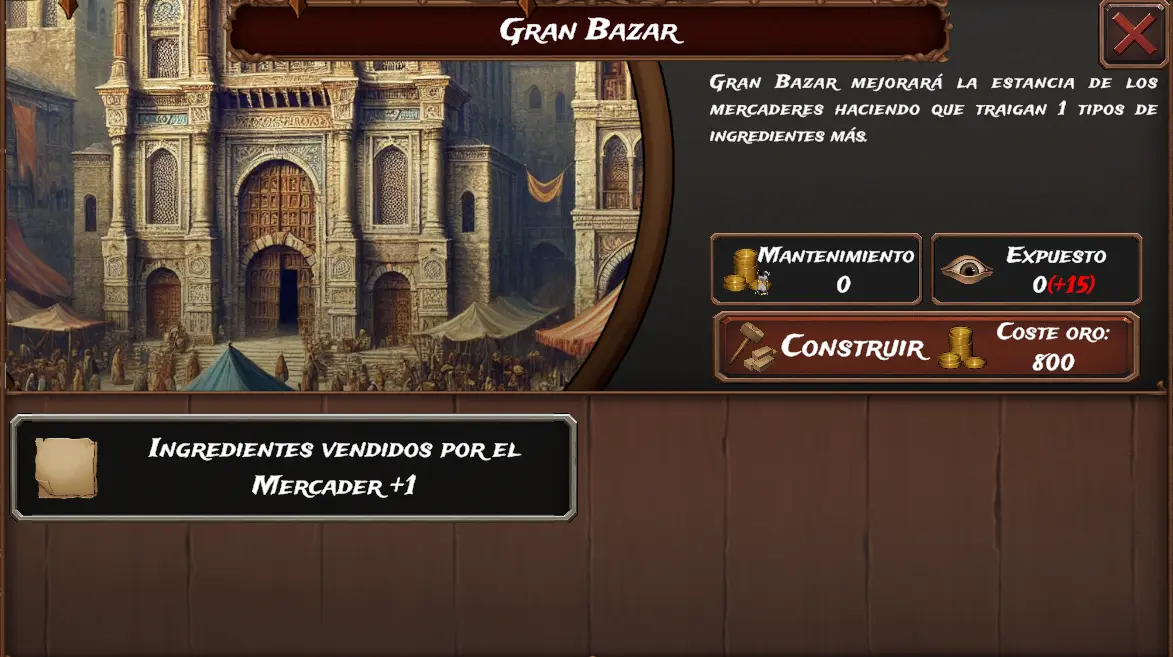
The Guild of Shadows also grants a Black Market discount: we buy more cheaply and sell for more.
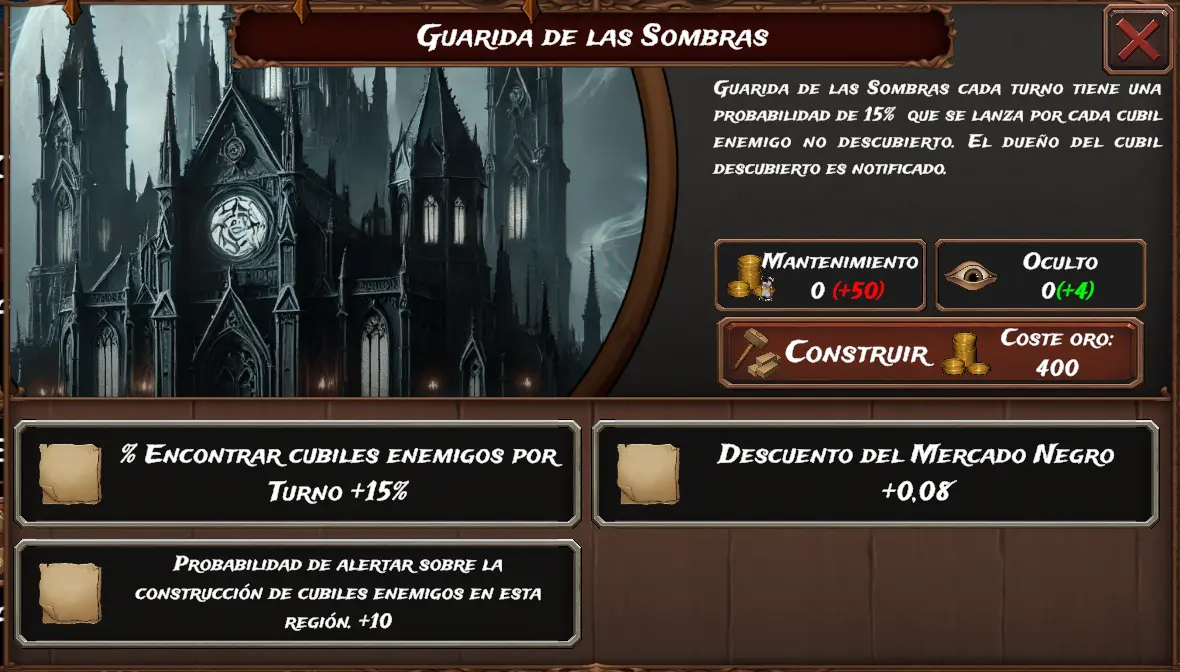
5. Traits
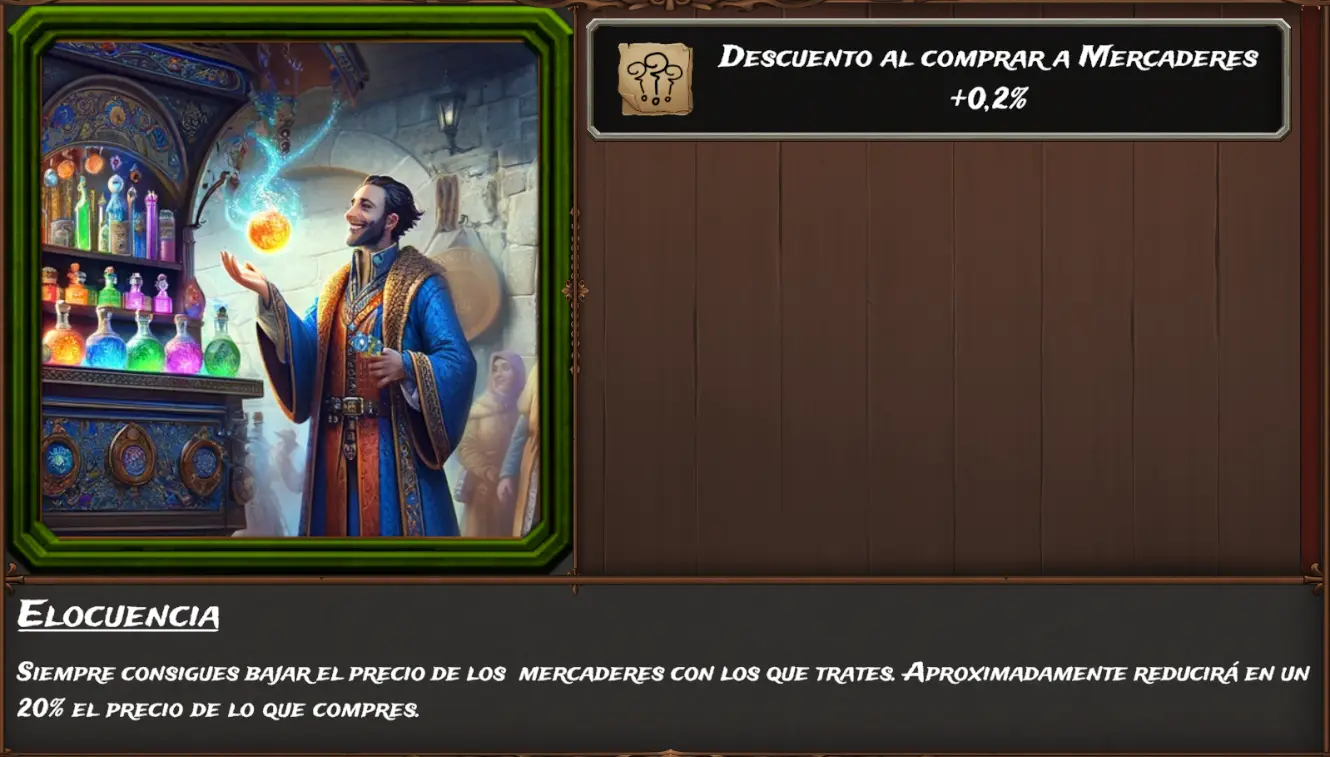
There are also traits that give us discounts with the regular merchant, letting us buy more cheaply and sell for more. One example is Eloquence, obtained by casting the legendary spell of the same name: 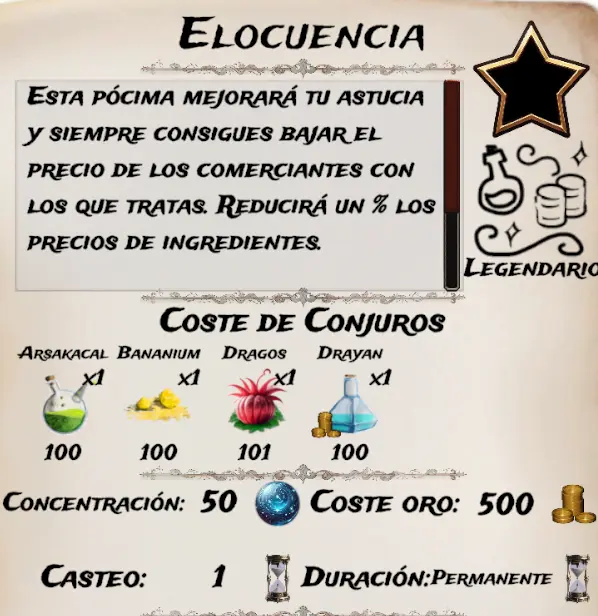



Comments (0)
Leave a comment